
Process Control Valves: A Procurement Engineer’s Guide to Selection, Specification and Supply
Category: Process Equipment — Valves & Controls
A process control valve is not a commodity. It is a precision instrument inserted permanently into a process line — chemical, petrochemical, power generation, water treatment, food and beverage, pharmaceutical — where it will be expected to perform reliably under pressure, temperature, and chemical exposure conditions that would destroy a lesser component. Specifying the wrong valve costs more than the valve itself. It costs downtime, process contamination, maintenance cycles, and in safety-critical applications, certification exposure.
This guide covers the principal valve types used in process control, the selection criteria that matter in practice, the specification language procurement engineers need to communicate with manufacturers, and the supply chain considerations that determine whether a technically correct valve is also a commercially viable one.
1. The principal valve types and where they belong
Globe valves
The globe valve is the workhorse of throttling control in process applications. Its linear stem movement, combined with a plug-and-seat configuration, allows precise flow regulation across a wide range of operating conditions. Globe valves are the correct choice where modulating control is required — flow rate adjustment, pressure reduction, temperature regulation via flow management.
They are not the correct choice where full-bore flow with minimum pressure drop is the priority. The tortuous flow path inherent in globe valve design creates pressure drop that is acceptable in control applications but wasteful in isolation or on-off service.
Specifying a globe valve for on-off duty in a high-volume line is an engineer’s mistake that a good valve manufacturer will flag. One that doesn’t flag it is telling you something about their approach to the customer relationship.
Ball valves
The quarter-turn ball valve dominates on-off isolation service across almost every process industry. Full bore design offers minimal pressure drop in the open position. Tight shutoff is achievable with appropriate seat materials — PTFE for general chemical service, reinforced seats for abrasive or high-temperature applications.
Floating ball designs suit lower pressure applications. Trunnion-mounted ball valves — where the ball is supported top and bottom rather than floating against the seats — are specified for larger diameters and higher pressures where the seat load on a floating ball would be excessive.
High-pressure ball valves for critical isolation service in hydrocarbon, chemical, and power generation applications represent a distinct product category requiring rigorous material specification, pressure testing to recognised standards, and traceability documentation that a commodity ball valve supplier cannot provide.
Butterfly valves
The concentric butterfly valve handles large-diameter, lower-pressure applications efficiently — HVAC, water treatment, general industrial service. Cost per unit of flow controlled is lower than globe or ball valves at equivalent diameters.
High-performance double-offset and triple-offset butterfly valves extend the operating envelope significantly — the triple-offset design, where the disc geometry produces a cam-like seating action rather than sliding contact, achieves tight shutoff at elevated pressures and temperatures suitable for steam, hydrocarbon, and chemical service. Specifying a triple-offset butterfly valve correctly requires understanding the offset geometry, seat material selection for the specific fluid and temperature, and the torque characteristics that determine actuator sizing.
Gate valves
Gate valves remain in service across process plants as full-bore isolation valves where infrequent operation is expected and pressure drop in the open position must be minimised. They are not throttling valves — operating a gate valve in the partially open position causes seat erosion and vibration that shortens service life significantly.
New installations increasingly specify ball valves in applications where gate valves were historically used, because ball valves offer equivalent flow characteristics with faster operation, better shutoff, and lower maintenance requirements. Gate valves remain the practical specification for large-diameter, low-frequency isolation in water and wastewater, and in older plant where replacement valve dimensions must match existing flange spacing.
Check valves
Check valves prevent backflow. Selection criteria — swing check, lift check, dual plate, axial flow — depend on the fluid, the flow velocity, the pipe orientation, and the consequences of water hammer on valve closure. An incorrectly selected check valve in a high-velocity liquid line is a recurring maintenance problem. A correctly selected one is invisible.
2. Material specification — the decisions that determine service life
Valve body material, trim material, and seat material are three separate specification decisions, each driven by different criteria.
Body material is determined primarily by the fluid handled, the operating pressure and temperature, and the applicable design standard. Carbon steel (A216 WCB) covers the majority of general industrial service. Stainless steel (CF8M, equivalent to 316 SS) handles corrosive chemical service, food and pharmaceutical applications requiring hygienic design, and cryogenic applications where carbon steel loses toughness. Duplex and super duplex stainless steels handle aggressive chloride environments — offshore, desalination, chemical processing with halogenated compounds. Exotic alloys — Hastelloy, Inconel, titanium — are specified for the most severe chemical or high-temperature service conditions where standard materials fail unacceptably quickly.
Trim material — the internal components including stem, ball or disc, and seats — is often specified independently of the body. A carbon steel body with stainless trim is standard practice in many applications. Hard-faced trim using Stellite or equivalent materials extends service life in erosive or abrasive service significantly.
Seat material in ball and butterfly valves determines chemical compatibility, temperature range, and shutoff class. PTFE handles most chemical service to approximately 200°C. Reinforced PTFE and PEEK extend temperature and pressure range. Metal seats are specified for high-temperature steam service and applications where soft seat materials are unsuitable.
The mistake to avoid: over-specifying body material while under-specifying trim. A stainless steel body with inadequate trim in an erosive application will fail at the trim long before the body shows wear.
3. Standards and certification — what to specify and why
Process valves in European industrial installations are governed by the Pressure Equipment Directive (PED 2014/68/EU), which classifies pressure equipment by fluid type, pressure, and diameter and assigns conformity assessment requirements accordingly. Valves above certain pressure-diameter thresholds require third-party conformity assessment and CE marking. Specifying a valve without confirming PED compliance for the applicable category is a procurement error with regulatory consequences.
Beyond PED, the standards that appear most frequently in process valve specifications:
ASME B16.34 — the dominant standard for pressure-temperature ratings of valves in North American and international project specifications. Defines material groups and allowable pressure at temperature for each.
API 6D — pipeline valves. Specifies design, testing, and documentation requirements for ball, gate, check, and plug valves in pipeline service. Required on oil and gas projects almost universally.
API 607 — fire testing for soft-seated quarter-turn valves. Required where fire-safe certification is specified, which is standard in hydrocarbon processing.
EN 12516 — European standard for valve shell design strength. Relevant for CE-marked process valves.
ATEX — explosive atmosphere certification. Required where valves with actuators operate in zones classified for explosive gas or dust atmospheres. The valve body itself is not an ignition source, but electric or pneumatic actuators fitted to valves in ATEX zones require appropriate certification.
Shell test, seat test, and functional test requirements should always be specified explicitly — to EN 12266 or API 598 depending on the project standard — and test certificates requested as a delivery document.
4. Actuator selection and the complete valve assembly
A process control valve in automated service is a valve body, actuator, positioner, and where required, solenoid valve, limit switches, and handwheel override — assembled and tested as a unit. Specifying these components separately and expecting field assembly to produce a calibrated, reliable control assembly is optimistic. Valve manufacturers who supply complete, factory-tested assemblies with loop calibration documentation reduce commissioning time and eliminate the interface ambiguity that field assembly creates.
Actuator types:
Pneumatic actuators — spring-return or double-acting — dominate process plant applications where instrument air is available. Fail-safe action (fail open or fail close on air failure) is a process safety decision that must be made before actuator selection, not after.
Electric actuators suit applications where instrument air is unavailable and where precise position control or data communication to a control system is required. Modern electric actuators with integral positioners and fieldbus communication (HART, Profibus, Foundation Fieldbus) provide valve position feedback, diagnostic data, and remote calibration capability that pneumatic actuators with separate positioners cannot match.
Hydraulic actuators handle large-diameter valves in high-torque applications — large pipeline ball valves, large butterfly valves in water infrastructure — where pneumatic actuators of equivalent torque output would be impractically large.
5. Supply chain considerations for European process valve procurement
European valve manufacturing remains strong in Germany, Italy, the United Kingdom, France, and the Netherlands, with established manufacturers covering the full range from standard industrial valves to high-specification critical service applications.
The decision between European and Asian-sourced valves is not simply a cost decision. For standard, non-critical applications — general isolation ball valves, butterfly valves in water service, low-pressure check valves — Asian manufacturers offer acceptable quality at competitive prices, and the cost saving is real.
For critical service applications — high-pressure, high-temperature, corrosive fluid, fire-safe, or applications requiring third-party witnessed testing and full material traceability — European manufacturers offer documentation, certification, and quality assurance infrastructure that most Asian suppliers at equivalent price points cannot replicate. The cost premium is justified not by sentiment but by the risk and liability profile of the application.
A procurement engineer who sources a critical isolation valve for a hydrocarbon application on price alone and receives a valve with inadequate material certification has not saved money. They have transferred cost to commissioning, to maintenance, and potentially to safety incident investigation.
The correct approach is application classification first — critical or standard — and supplier selection matched to that classification. Many European projects use both: Asian-sourced valves for standard service, European-sourced valves for critical applications within the same project.
6. What to ask a valve manufacturer before placing an order
These questions separate manufacturers with genuine process industry capability from those supplying catalogue valves:
Can you provide material test certificates (MTCs) to EN 10204 3.1 or 3.2 for all pressure-containing components? A 3.1 certificate is manufacturer-certified; a 3.2 certificate is independently witnessed. Critical applications require 3.2.
What is your standard shell and seat test procedure, and to which standard? Ask for a sample test certificate from a recent order.
Do you maintain a quality management system certified to ISO 9001? Who is your certification body and when was your last audit?
What is your standard delivery time for this valve type, and what is your current lead time? Standard lead time tells you their manufacturing rhythm; current lead time tells you their order book.
Can you supply the valve as a complete actuated assembly with factory acceptance test (FAT) documentation? If yes, who assembles and tests — you or a third party?
Do you hold API licences relevant to this product? For pipeline and oil and gas applications, API 6D and API 607 licences indicate a manufacturer who has submitted to third-party audit of their design and manufacturing processes.
What are your after-sales capabilities — spare parts availability, field service, repair and refurbishment?
The answers to these questions, and the confidence and specificity with which they are given, tell an experienced procurement engineer more about a valve manufacturer than any catalogue.
manufacturers.wiki covers industrial manufacturing products, suppliers, certifications, and international sales channels. Articles are written from direct industry experience, not aggregated from secondary sources. For manufacturers seeking international representation in process equipment and related industrial sectors, visit revrok.net.
Frequently asked questions
What is the difference between a globe valve and a ball valve?
Globe valves are designed for throttling and flow control — their plug-and-seat configuration allows precise regulation across a range of flow rates. Ball valves are designed for on-off isolation service — quarter-turn operation, full-bore flow in the open position, tight shutoff when closed. Using a ball valve for throttling service or a globe valve for simple isolation is a common specification error with maintenance consequences.
What does PED compliance mean for process valves in Europe?
The Pressure Equipment Directive (PED 2014/68/EU) classifies pressure equipment including valves by fluid type, pressure, and diameter. Above certain thresholds, CE marking and third-party conformity assessment are legally required for equipment placed on the European market. Specifying valves without confirming the applicable PED category is a procurement error with regulatory and liability implications.
What is the difference between a 3.1 and 3.2 material test certificate?
Both are material test certificates to EN 10204 confirming the chemical composition and mechanical properties of pressure-containing components. A 3.1 certificate is certified by the manufacturer’s own authorised inspector. A 3.2 certificate is additionally witnessed and countersigned by an independent third-party inspector. Critical service applications — high pressure, hydrocarbon, safety-critical isolation — typically require 3.2.
When is ATEX certification required on a process valve?
ATEX certification is required on actuators and associated electrical components fitted to valves operating in zones classified for explosive gas or dust atmospheres. The valve body itself is not an ignition source and does not require ATEX certification, but electric actuators, solenoid valves, limit switches, and positioners fitted in classified zones must carry appropriate ATEX certification for the zone category.
How do I choose between a European and Asian-sourced process valve?
Application classification determines the correct sourcing decision. Standard, non-critical applications — general isolation, low-pressure service, non-hazardous fluids — can be sourced competitively from Asian manufacturers without significant quality risk. Critical service applications requiring full material traceability, third-party witnessed testing, fire-safe certification, or API compliance are better sourced from established European manufacturers whose documentation and quality assurance infrastructure matches the application’s risk profile.
Find manufacturers and suppliers
manufacturers.wiki maintains a directory of verified industrial manufacturers, suppliers, and export service providers. Browse company profiles, product categories, and editorial contributions by sector.
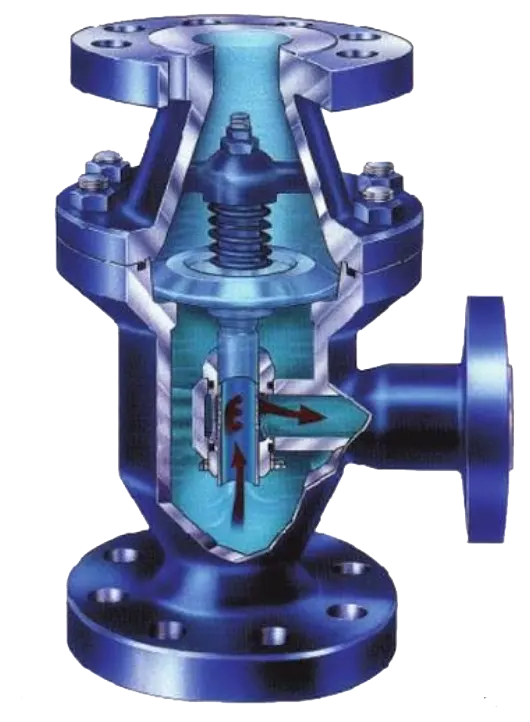
Above: YARWAY ARC PumpProtection Valves (Automatic Recirculation) Series 9200, 9100, 5300 and BPR