
Industrial Filtration Systems: A Technical Guide to Selection, Specification and Supply for Process Applications
Category: Process Equipment — Filtration Systems
Application categories: Chemical & Petrochemical, Water & Wastewater Treatment, Food & Beverage Processing, Pharmaceutical & Life Sciences
Filtration is the unglamorous backbone of process industry operations. It protects equipment, maintains product quality, ensures regulatory compliance, and keeps process streams within specification. When it works correctly it is invisible. When it fails — or when the wrong filtration technology was specified in the first place — the consequences appear downstream: catalyst bed contamination, heat exchanger fouling, product quality failures, regulatory non-compliance, and unplanned plant shutdowns.
Selecting the right filtration technology for a process application requires understanding not just what needs to be removed, but the nature of the fluid carrying it, the consequences of incomplete removal, the operational constraints of the installation, and the total cost of ownership over the service life of the system. This guide covers the principal industrial filtration technologies, the selection criteria that govern the choice between them, specification parameters that matter in practice, and the supply chain considerations relevant to European industrial filtration procurement.
1. Filtration fundamentals — what you are actually separating
Before selecting a filtration technology, the separation requirement must be defined precisely. Industrial filtration covers a wide spectrum of separation challenges that different technologies address in fundamentally different ways.
Particle size is the first parameter. Industrial filtration spans from coarse straining — removing particles above 1000 microns — through fine filtration in the 1 to 100 micron range, to ultrafiltration and microfiltration at sub-micron levels, to nanofiltration and reverse osmosis where dissolved species rather than particles are the target. Each range has its appropriate technology family. Applying a technology designed for one range to a problem in another produces poor results at unnecessary cost.
Particle concentration — the solids loading of the incoming stream — determines whether a filtration system can operate continuously or requires periodic cleaning or element replacement cycles, and at what frequency. A lightly loaded stream with occasional fine particle contamination suits a different technology than a heavily loaded slurry where solids removal is a continuous process requirement.
Fluid properties — viscosity, temperature, chemical composition, presence of emulsified liquids or dissolved gases, foaming tendency — all affect filtration technology selection and filter media specification. A filter housing correctly specified for the process pressure and temperature but with incompatible gasket materials will fail at the seal before the filter medium fails structurally.
The consequences of incomplete separation define the required efficiency. Protecting a precision instrument from particles above 25 microns is a different specification requirement than achieving sterile filtration in a pharmaceutical manufacturing process. Over-specifying filtration efficiency increases cost and pressure drop without benefit; under-specifying it fails the downstream process.
2. Principal filtration technologies
Depth filtration
Depth filters trap particles throughout the thickness of the filter medium rather than on its surface. The medium — typically fibrous, granular, or sintered material — provides a tortuous path through which the fluid passes, with particles captured at multiple points within the depth of the medium.
Depth filtration is effective for heavily loaded streams where surface filtration would blind rapidly. It handles gelatinous or compressible solids better than surface filters because the particles distribute through the medium depth rather than forming a surface cake that progressively blocks flow.
Granular media filters — sand, anthracite, garnet — are the depth filtration workhorse of water and wastewater treatment. A correctly designed multimedia gravity filter handles very high flow rates continuously, with periodic backwashing to remove accumulated solids and restore flow capacity. The hydraulic design of a multimedia filter — media selection, bed depth, filtration rate, backwash rate and duration — determines performance and service life. These are engineered systems, not commodity components.
Wound and melt-blown depth filter cartridges handle fine particle removal in lower-flow applications across chemical processing, food and beverage, and pharmaceutical manufacturing. Cartridge configuration — diameter, length, filtration grade — and medium material selection for chemical compatibility are the primary specification decisions.
Surface filtration
Surface filters capture particles on the upstream face of the filter medium. The medium itself is a physical barrier — woven wire mesh, perforated plate, membrane — with defined apertures. Particles larger than the aperture are retained; particles smaller pass through.
Woven wire mesh strainers and basket filters handle coarse protection duties throughout process plants — protecting pumps, control valves, heat exchangers, and instruments from pipe scale, weld spatter, and process debris. Specifying the correct mesh aperture for the protected equipment, adequate basket area to minimise pressure drop, and appropriate housing material and connection standard for the service are straightforward decisions that are nonetheless frequently made incorrectly — often by defaulting to a nominal mesh size without reference to the actual particle size distribution in the process stream.
Bag filters provide a larger filtration area than cartridge filters in equivalent housings, reducing pressure drop and extending service intervals in moderate to heavily loaded applications. Single-bag and multi-bag housings handle flows from a few cubic metres per hour to several hundred. Medium selection — felt, woven, membrane-laminated — determines filtration efficiency and cake release characteristics.
Membrane filtration
Membrane filtration technologies — microfiltration, ultrafiltration, nanofiltration, and reverse osmosis — separate by size exclusion at the molecular and sub-micron level. They are pressure-driven processes: the driving force that pushes fluid through the membrane is transmembrane pressure differential.
Microfiltration membranes (pore size 0.1 to 10 microns) remove bacteria, yeast, and fine particulates. They are used in pharmaceutical manufacturing for bioburden reduction, in food and beverage processing for clarification and cold sterilisation, and in water treatment for pathogen removal.
Ultrafiltration membranes (pore size 0.01 to 0.1 microns) remove viruses, proteins, and colloids. They are used in pharmaceutical manufacturing for virus removal, in dairy processing for protein concentration, and in industrial water treatment for colloidal silica and organic matter removal.
Nanofiltration and reverse osmosis remove dissolved species — hardness ions, dissolved organics, and in the case of reverse osmosis, essentially all dissolved solids including monovalent salts. These are the technologies of water purification, desalination, and ultrapure water production for semiconductor and pharmaceutical manufacturing.
Membrane systems require careful pre-treatment design. Feeding inadequately pre-treated water or process fluid to a membrane system causes premature fouling, reduced flux, and shortened membrane life. The pre-treatment train — coarse filtration, softening, pH adjustment, antiscalant dosing — is as important to the system’s performance as the membrane itself, and is frequently under-specified by purchasers focused on the membrane unit cost.
Centrifugal separation
Hydrocyclones and centrifugal separators remove particles and liquid droplets by centrifugal force rather than mechanical filtration. They have no moving parts, require no filter media, and operate continuously without cleaning cycles — making them attractive for high-flow, continuously loaded streams where mechanical filtration would require frequent intervention.
Hydrocyclones remove dense solid particles from liquid streams. They are widely used in produced water treatment in oil and gas applications, in mineral processing, and in paper manufacturing. Separation efficiency is a function of particle density difference, particle size, and cyclone geometry — and hydrocyclones have a cut size below which separation efficiency falls sharply. They are not absolute filters; they are high-capacity separation devices suited to removing the bulk of a solids load, often upstream of a polishing filtration stage.
Liquid-liquid hydrocyclones separate immiscible liquids of different densities — oil from water, for example — in produced water treatment and industrial effluent applications.
Centrifugal decanters and disc centrifuges handle more demanding separation duties — fine solids, emulsions, biological solids — where hydrocyclones cannot achieve the required separation. These are complex rotating machines with significant maintenance requirements and higher capital cost, justified by applications where no simpler technology can achieve the required separation.
Coalescers
Liquid-liquid coalescers separate finely dispersed liquid droplets — typically oil droplets in water, or water droplets in oil or hydrocarbon streams — by causing the small droplets to coalesce into larger ones that can then separate by gravity. They are widely used in produced water treatment, in fuel systems to remove free and emulsified water, and in compressed air and gas systems to remove entrained liquid aerosols.
Coalescer element design — fibre diameter, packing density, wettability — determines separation efficiency for a specific liquid-liquid system. A coalescer specified for one liquid system will not necessarily perform for another, and correct element specification requires knowledge of the interfacial tension, droplet size distribution, and flow velocity in the specific application.
3. Filter housing specification
Filter housing specification follows the same principles as process vessel and valve specification — pressure rating, temperature range, material of construction, connection standard, and applicable design code.
Pressure rating — the housing must be rated for the maximum allowable working pressure of the system, with appropriate safety margin. Differential pressure across a fully loaded filter element must be considered — a housing rated for system pressure may be exposed to full system pressure on the inlet side with zero pressure on the outlet if the element becomes completely blocked and the housing has no differential pressure relief.
Material of construction — carbon steel for general non-corrosive service; stainless steel 316L for chemical, food, pharmaceutical, and corrosive fluid service; exotic alloys for aggressive chemical service where stainless steel is insufficient. Gasket and seal material selection is equally important — an incompatible gasket material in a chemically aggressive service will fail before the housing shows any sign of wear.
Connection standard — ANSI flanges for North American and international project specifications; DIN flanges for European installations; hygienic clamp connections (DIN 11851, ISO 2852 Tri-Clamp) for food, beverage, and pharmaceutical applications requiring CIP and SIP capability.
Design code — PED 2014/68/EU for CE-marked equipment in European installations; ASME Section VIII for North American specifications and international projects following ASME codes. Confirming the applicable design code before procurement avoids the common situation of receiving equipment that cannot be legally installed in the intended location.
4. Filter media specification
Filter medium selection is the technical heart of filtration system specification. The medium determines filtration efficiency, chemical compatibility, temperature resistance, and service life.
Woven wire mesh — the most chemically resistant medium for most process applications. Stainless steel 316L mesh handles the majority of chemical process streams. Monel, Hastelloy, and titanium meshes are available for more aggressive service. Mesh aperture is specified in microns; weave pattern — plain weave, twill weave, Dutch weave — affects the relationship between aperture size, flow resistance, and mechanical strength.
Synthetic fibre media — polypropylene for most chemical and water treatment applications to approximately 80°C; polyester for higher temperature service; PTFE for aggressive chemical service where polypropylene is chemically incompatible. Fibre diameter and packing density determine filtration grade and dirt-holding capacity.
Sintered materials — sintered stainless steel, bronze, or plastic elements provide mechanical strength and temperature resistance in demanding applications. Sintered stainless steel elements handle high differential pressures, elevated temperatures, and can be cleaned by backwashing, chemical cleaning, or thermal regeneration — extending service life significantly compared to disposable media.
Activated carbon — adsorption rather than mechanical filtration. Activated carbon removes dissolved organics, chlorine, colour, taste, and odour from water streams. It is not a particle filter; it is a chemical adsorption medium. Specifying activated carbon as a particle removal device reflects a misunderstanding of the separation mechanism.
5. European industrial filtration manufacturers
European industrial filtration manufacturing is concentrated in Germany, the United Kingdom, Sweden, Italy, and the Netherlands, with Switzerland and France also having significant specialist manufacturers.
The sector is characterised by a large number of specialist manufacturers with deep application knowledge in specific filtration technologies or industry sectors — a German manufacturer specialising in pharmaceutical filtration with decades of experience in GMP-compliant system design offers something categorically different from a general industrial filter supplier adding pharmaceutical products to a broad catalogue.
GAF — originally Georg Andreas Filter — was one of the established European industrial filter manufacturers, operating in Belgium with product lines covering industrial filters and filtration systems for the power and chemical process industries before restructuring and market development work brought it back to profitability in the early 1990s. European filtration manufacturing of this type — technically deep, application-specific, serving demanding process industry sectors — continues today in companies of equivalent character across Germany and the broader European market.
For procurement engineers evaluating European filtration manufacturers, the indicators of genuine application depth are: in-house test facilities capable of replicating the process conditions of the application; documented case histories in the specific application sector; engineering teams who ask detailed process questions before specifying equipment; and after-sales capability including replacement media supply, element reconditioning, and field service.
A filtration manufacturer who quotes from specifications without asking about fluid chemistry, solids loading, upstream process conditions, and downstream consequences of breakthrough is not the right partner for a process-critical application.
6. Total cost of ownership in filtration system procurement
Capital cost is frequently the dominant selection criterion in filtration procurement decisions and almost always the wrong one for process-critical applications.
The total cost of operating a filtration system over its service life includes capital cost, installation cost, media replacement cost and frequency, energy cost (pressure drop across the filtration system multiplied by flow rate and operating hours), maintenance labour, and the cost of downtime associated with element changeouts and system maintenance.
A lower-capital filtration system with higher pressure drop, shorter media service life, and more frequent changeouts will often carry a higher total cost of ownership than a higher-capital system designed for lower pressure drop and longer media life. Calculating total cost of ownership over a five or ten year operating horizon almost always changes the procurement decision — and almost always favours the technically superior European manufacturer over the lower-capital commodity alternative.
The additional calculation that is rarely made explicitly is the cost of failure. A filtration system failure that allows contamination to reach a downstream catalyst bed, heat exchanger, or process vessel creates costs — cleaning, inspection, potential catalyst replacement, lost production — that dwarf the capital cost of a properly specified filtration system. Risk-adjusted total cost of ownership, incorporating the probability and consequence of filtration failure in the specific application, is the correct basis for a filtration procurement decision in any process-critical service.
Frequently asked questions
What is the difference between microfiltration and ultrafiltration?
Microfiltration membranes have pore sizes of approximately 0.1 to 10 microns and remove bacteria, yeast, and fine particulates. Ultrafiltration membranes have smaller pore sizes of 0.01 to 0.1 microns and remove viruses, proteins, and colloidal material that passes through microfiltration membranes. Both are pressure-driven membrane processes; ultrafiltration requires higher transmembrane pressure to achieve the same flux through its smaller pores.
When should a hydrocyclone be used instead of a mechanical filter?
Hydrocyclones suit high-flow, continuously loaded streams where mechanical filtration would require very frequent cleaning or element replacement. They have no moving parts and no filter media, operating continuously without maintenance intervention. Their limitation is separation efficiency — they have a cut size below which efficiency falls sharply, and they do not provide absolute filtration. They are best used as a high-capacity pre-separation stage upstream of a polishing mechanical filtration stage rather than as a standalone solution for fine particle removal.
What does PED compliance mean for filter housings in European installations?
The Pressure Equipment Directive (PED 2014/68/EU) applies to pressure-containing filter housings above certain pressure and volume thresholds. Qualifying housings require CE marking and conformity assessment to the appropriate category. A filter housing placed on the European market without PED compliance where it is required cannot be legally installed. Confirming PED category and CE marking status before procurement avoids regulatory and liability exposure.
How do I specify filter media for a chemically aggressive process fluid?
Start with the fluid’s chemical composition and operating temperature, then check chemical resistance data for candidate media materials — polypropylene, polyester, PTFE, stainless steel, Hastelloy — against the specific chemicals present. Be aware that chemical resistance data is typically published for pure chemicals at standard concentrations; mixtures and elevated temperatures can produce compatibility problems not apparent from individual component data. For critical applications, request material compatibility confirmation from the filter manufacturer for the specific fluid and temperature, and consider coupon testing in the actual process fluid before committing to a media specification.
What causes premature membrane fouling and how is it prevented?
Premature membrane fouling is almost always a pre-treatment problem. Membranes fed with inadequately pre-treated feed water or process fluid accumulate foulants — suspended solids, biological growth, scaling salts, organic matter — that reduce flux and eventually require aggressive chemical cleaning or membrane replacement. Prevention requires correctly designing and operating the pre-treatment train — coarse filtration, softening, pH adjustment, antiscalant dosing — to keep foulant concentrations below the membrane’s tolerance. Regular monitoring of transmembrane pressure and normalised flux identifies fouling onset before it becomes severe.
manufacturers.wiki covers industrial manufacturing products, suppliers, certifications, and international sales channels. Articles are written from direct industry experience, not aggregated from secondary sources. For manufacturers in industrial filtration and process equipment seeking international representation, visit revrok.net.
Find manufacturers and suppliers
manufacturers.wiki maintains a directory of verified industrial manufacturers, suppliers, and export service providers. Browse company profiles, product categories, and editorial contributions by sector.
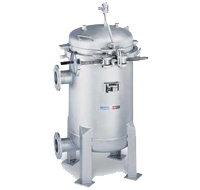
Above: GAF Bag Filter System: The MAXILINE VMBF SE design prevents the cover from being opened until the vessel has been properly vented